 TR
TR  EN
EN  AR
AR  ZH
ZH  FR
FR  DE
DE  IT
IT  PT
PT  RU
RU  ES
ES  UK
UK 
 Can Durağan
 Types of Grounding: Industrial, Building, and Transformer Grounding
Grounding systems form the cornerstone of electrical safety and, when correctly implemented, prevent serious accidents. In industrial facilities, particularly those working with high-voltage equipment, incorrect or incomplete grounding systems can pose a life-threatening risk.
Types of Grounding
Grounding in electrical installations is designed according to specific principles to ensure safety. The effectiveness of the system is measured by its grounding resistance, with a lower resistance value indicating more efficient system operation.
Grounding systems are designed to meet different needs, including transformer grounding , building grounding , and industrial grounding . The effectiveness of these systems depends on the type of conductor used. They also extend the lifespan of devices by reducing the harmful effects of high voltage surges caused by lightning strikes.
Industrial Grounding
Industrial grounding is of particular importance in high-current installations. In these systems, grounding rods, cables, and tapes are used among the grounding elements. Furthermore, in industrial facilities, a low-resistance line is preferred for conducting leakage currents to the ground. This prevents the current from reaching a level that could damage equipment.
Industrial grounding begins with measuring soil resistance and selecting appropriate electrodes. Copper or galvanized rods and plates are placed at designated points, and the electrodes are connected using thermowelding or bolted connections. Then, soil resistance is measured to check the system's compliance with international standards. Finally, maintenance and measurements are performed at least once a year to ensure the system's safety.
Grounding in Buildings and Structures
The first step in building grounding is selecting a suitable location. Generally, the connection to the ground around the building is made using grounding rods or electrodes . For ring grounding, braided copper conductors of various cross-sections are preferred. Additionally, galvanized strip is recommended for foundation grounding systems. Since it is made of the same material as reinforcing steel, it does not carry a risk of corrosion.
The grounding system connections in buildings are made as follows:
- Connection to the main electrical distribution panel.
- Creating a grounding busbar or junction point.
- Connecting all electrical circuits with a grounding system.
Transformer Grounding
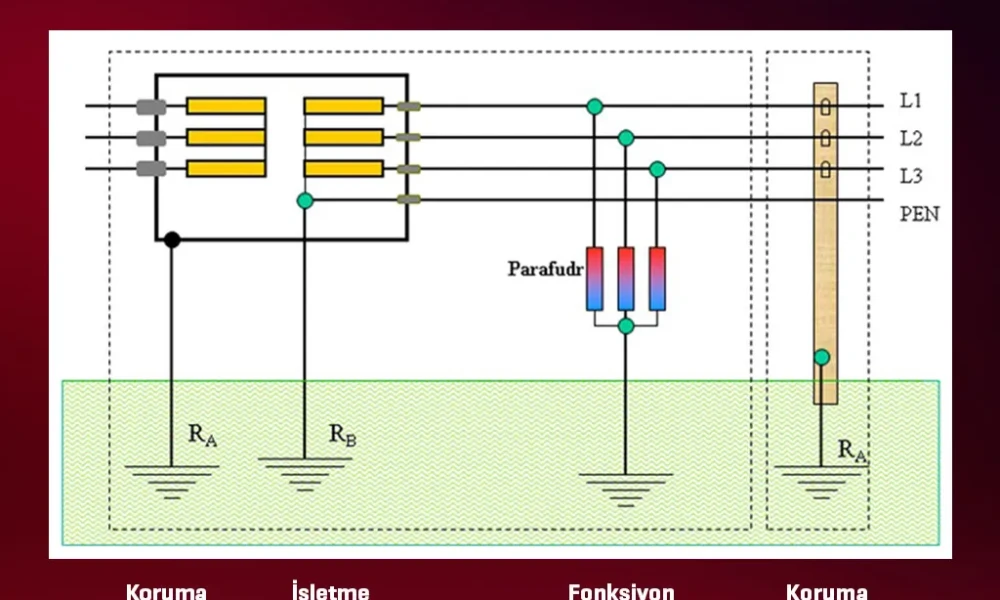
Transformer grounding is done in two separate ways: protective grounding and operational grounding. The basic requirements of the grounding system in transformer substations are as follows:
- It balances the potential of the underground grounding circuit.
- It protects lives and property from excessive voltage surges.
- It provides a low-impedance path for fault currents.
Protective Earthing : Medium-voltage switchgear, distribution transformer, and low-voltage panel are connected to the equipotential bonding bar with braided copper conductors. Additionally, a 30×3.5 mm galvanized earthing strip runs under the floor slab, encircling the entire floor of the substation.
Operational Grounding : This is done by directly grounding the star point of the distribution transformer. For this connection, 0.6/1 kV 1×150 mm² yellow-green NYY cable is typically used. For the grounding system to be effective, the grounding resistance must be less than 10 ohms.
Grounding is an indispensable element for the safety of electrical installations. Regular maintenance and inspection of grounding systems are vital, especially in installations using high voltage. Therefore, facility managers should conduct periodic measurements and make necessary corrections in a timely manner.
For a safe electrical installation, selecting the correct type of grounding and professional installation are essential. Furthermore, the system's effectiveness must be maintained through regular checks and maintenance, and measurement results must be recorded.
Frequently Asked Questions
What is the importance of industrial grounding?
Industrial grounding is particularly important in high-current installations. This system safely conducts leakage currents to the ground, preventing damage to equipment. It also plays a critical role in ensuring employee safety.
What happens if a building doesn't have a grounding system?
Without proper grounding, electrical leaks in buildings increase the risk of electric shock and fire, damage appliances, and can lead to legal problems.
What are the important points to consider when grounding a transformer?
Transformer grounding is done in two ways: protective and operational grounding. The grounding resistance must be less than 10 ohms. Medium voltage switchgear, distribution transformer, and low voltage panel should be connected to the equipotential bonding bar with braided copper conductors.
Why is the maintenance of grounding systems important?
Regular maintenance and inspection of grounding systems are critical for maintaining the safety of electrical installations. Periodic measurements should be taken and the grounding resistance checked. This prevents potential hazards and preserves the effectiveness of the system.
