 TR
TR  EN
EN  AR
AR  ZH
ZH  FR
FR  DE
DE  IT
IT  PT
PT  RU
RU  ES
ES  UK
UK 
 Can Durağan
 The Role of Faraday Cages in Lightning Protection Methods
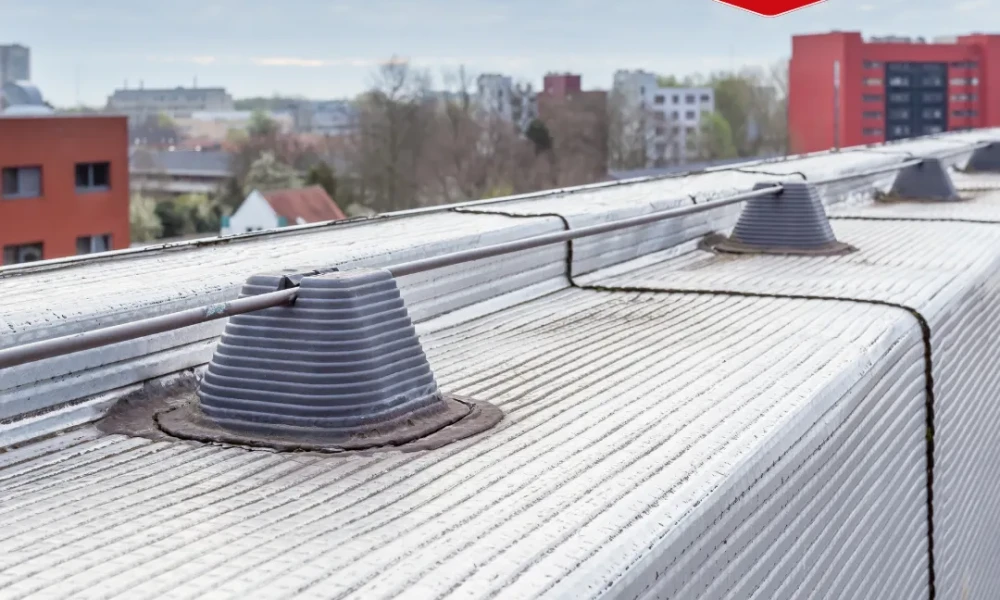
The Faraday cage , discovered by Michael Faraday in 1836, is a significant invention that blocks incoming electromagnetic waves. We encounter many Faraday cage applications in our daily lives without even realizing it. Thanks to these systems, we are protected from the harmful effects of electromagnetic waves. They are particularly effective in protecting our buildings and electronic devices against natural electrical discharges like lightning. This technology is one of the invisible heroes of modern life.
What is a Faraday Cage?
A Faraday cage , a closed lattice system made of a conductive material, is based on the principle that electric charges are distributed only on the surface. This physical principle originated from the experiments on electricity and magnetism conducted by the British scientist Michael Faraday. When considering the purpose of a Faraday cage , its most basic function is to prevent external electromagnetic fields from penetrating inside or electromagnetic waves from escaping. This conductive lattice protects the space inside by circulating the electric current across its surface. In this way, it isolates the interior from the harmful effects of strong electric fields.
How does a Faraday cage work?
The working principle is based on a physical phenomenon known as electrostatic induction. An external electric field causes the free electrons on the cage to displace. These electrons redistribute on the cage surface. This redistribution creates an opposing electric field that perfectly balances the external electric field. As a result, the net electric field inside the cage becomes equal to zero, and the objects inside are completely protected. Therefore, when lightning strikes, the electric current remains on the outer surface of the Faraday cage. People or electronic devices inside are not harmed.
The construction of a Faraday cage varies depending on its intended use. Basically, it is formed as a network or mesh made of interconnected conductive materials such as copper, aluminum, or steel. The effectiveness of the cage depends on the conductivity of the material used, the pore size of the cage network, and the frequency of the electromagnetic waves to be protected. However, the important point is that the pore size should be smaller than the wavelength of the electromagnetic wave to be protected. In this way, even high-frequency waves can be successfully blocked by the Faraday cage . Thanks to these properties, it has become an indispensable part of building protection systems against high-voltage electrical discharges such as lightning.
The Role of Faraday Cages in Lightning Protection Systems
In the world of lightning protection , the Faraday cage stands out as one of the most reliable systems. Its primary function is to protect living beings and objects from the harmful effects of lightning. In fact, the current IEC 62305 standard does not directly include the concept of a "Faraday cage." In Turkey, this term is used to describe passive lightning arresters , mesh methods using bare conductors, and systems consisting of bare lightning down conductors descending from the building's surface.
It provides a protection system consisting of braided conductors covering the roof and walls of the structure. This system is formed with catching terminals, roof conductors, down conductors, and grounding components. It is considered the most effective method among lightning protection systems. It is the preferred protection method, especially in data centers, server rooms, laboratories, and facilities containing flammable and explosive materials.
Faraday cages , implemented according to the TSE EN 62305 standard, are designed with different criteria depending on their protection levels. The cage spacing varies according to the protection levels as follows:
Protection Levels (IEC/TS according to the E coefficient):
- E > 0.98 → Level 1
- 0.95 < E ≤ 0.98 → Level 2
- 0.90 < E ≤ 0.95 → Level 3
- 0.80 < E ≤ 0.90 → Level 4
- Once these levels are determined and the project is designed accordingly, the Faraday cage is implemented in a way that conforms to these criteria.
Cage Spacing According to Protection Levels
- 5x5 m for level 1.
- Level II: 10x10 m
- Level III: 15x15 m
- 20x20 m for level IV.
Accordingly, down conductor spacing varies between 10 and 20 meters depending on the level of protection.
The design of a Faraday cage depends on the building's architectural structure and protection needs. First, consultations are held with the building owner, architect, contractors, and electrical contractors to prepare the design drawings. One of the advantages of this system is the significant reduction of the electromagnetic field within the protected area and the safe redirection of lightning currents by separating them into several conductors. It also contributes to the creation of a general equipotential bond between conductive structures and the ground.
Applications and Construction of Faraday Cages
We frequently encounter Faraday cage applications in our daily lives, but often we aren't even aware of them. Microwave ovens, cars, airplanes, and even special cases for mobile phones are applications that work on this principle. While the answer to the question "What is a Faraday cage used for?" varies depending on the application, the fundamental purpose is always the control of electromagnetic waves.
MRI imaging rooms used in hospitals are designed using the Faraday cage principle to prevent external electromagnetic waves from entering. This prevents interference from external electromagnetic waves during imaging. This system is also used to prevent electromagnetic interference in places containing sensitive electronic equipment, such as data centers, military facilities, and laboratories. Even some social spaces are being enclosed with Faraday cages to limit technology use.
In Faraday cage systems used for lightning protection in buildings, the exterior surface of the structure is woven with conductive wires in a mesh pattern. All conductors and pointed metals (lightning capture terminals) are connected to each other and grounded.
In conclusion, Faraday cage systems are vital for lightning protection. Today, with technological advancements, these systems have become even more advanced and diverse. In the future, as electromagnetic pollution increases, the importance of this technology will only grow. Therefore, understanding and correctly applying the principles of this system is crucial for protecting our electronic devices and structures.
Frequently Asked Questions (FAQ)
What is the role of a Faraday cage in lightning protection?
It is an effective method of protecting buildings from lightning strikes. By containing the lightning current on the exterior surface of the structure, it keeps people and electronic devices safe.
Does a Faraday Cage Protect Against Magnetic Fields?
Yes, it provides protection against both static and variable electromagnetic fields. This feature allows it to protect sensitive electronic devices and measuring instruments from external influences.
What equipment is used in lightning protection using a Faraday cage?
1. Roof Enclosure Conductors
- It is formed with copper, CCA conductors, aluminum or galvanized steel conductors.
- Copper or galvanized steel conductors used in the soil and concrete around the building.
2. Active and Passive Ends
- It first captures the lightning, then transmits it to the ground through conductive paths.
- Copper, aluminum, galvanized steel, and stainless steel are preferred materials in the manufacture of passive catching tips.
3. Downstream Conductors
- These are conductors that carry lightning current from the lightning rod or the roof's conductive mesh to the grounding system.
- Mono copper, galvanized steel, and aluminum conductors are commonly used.
- According to the project design, reinforcing steel bars embedded in the concrete can be used as down conductors.
4. Grounding Electrodes
- It ensures that lightning current safely flows into the ground.
- It can be rod, plate, or ring type.
- It is made of galvanized steel, copper, or stainless steel.
- Using aluminum conductors as grounding electrodes or conductors is not suitable.
